
Wood Density
Wood Density
The weight per cubic meter of Afzelia wood is quite high, around 405kg.
Janka Hardness Test

The Janka test is useful for directly determining how well wood will resist impacts, wear, and dents, as well as indirectly predicting the difficulty of nailing, screwing, and sanding. The Janka hardness rating for Afzelia is 1680 N.
Bending Strength

Bending strength is a measure of a species’ resistance before breaking. It can be used to determine the overall strength of a wood species. Unlike the modulus of elasticity, which measures wood deformation but not its ultimate strength (meaning some wood species will bend under stress but will not break easily). The bending strength of Afzelia wood is 63 MPa.
Modulus of Elasticity

The modulus of elasticity measures the stiffness of wood and is a good general indicator of its strength. According to tests, Afzelia has a modulus of elasticity of 9.7 GPa.
Compressive Strength

Compressive strength parallel to the grain measures the maximum crushing strength of wood when force is applied to the ends of the wood (compression parallel to the grain). According to tests, Afzelia has a compressive strength of 35.5 MPa.
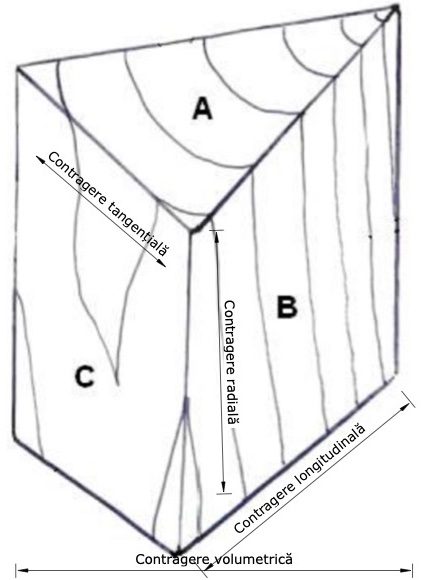
Wood Swelling and Shrinkage
These are particularly important phenomena that occur in wood when the content of bound water in the cell walls changes, resulting in variations in its dimensions and volume when moisture enters or leaves the wood. Considering wood’s hygroscopic nature, these phenomena are permanent and cyclical, also known as the natural movement of wood. This cannot be prevented, only reduced through various wood stabilization processes. Wood swelling refers to the increase in its dimensions and volume, while wood shrinkage is the opposite phenomenon, consisting of the reduction of dimensions and volume due to the decrease of bound water content.
Wood swelling and shrinkage in the radial direction = 3.9 %
Swelling and shrinkage in the tangential direction = 8.2%
Volumetric swelling and shrinkage = 12.9%
Color/Appearance
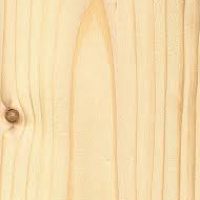
It is a softwood species with a creamy white color and shades of yellow or reddish-brown.
Grain / Texture
Spruce has a twisted, uniform grain with fibers spirally deviated around the longitudinal axis of the tree, while remaining parallel to each other. The twist direction can be either to the right or to the left. The texture is generally uniform.
Decay Resistance
Being part of durability class 4 or 5, without protection it would degrade within about 5 years. The heartwood is considered slightly resistant to non-resistant to decay.
Odor
A slightly rancid odor during processing.
Allergies/Toxicity During Processing
Reactions to the Picea genus are very rare, but it has been reported as a sensitizer because it may cause skin irritation and asthma-like respiratory effects.
Price/Availability
Quality spruce is inexpensive and easy to find. Although price increases in 2021 mainly affected softwood species, spruce remains the most affordable material used for manufacturing wooden windows. Although spruce is native to Europe, it has also been planted in the northeastern Rocky Mountains and along the Pacific coast of the United States. Spruce species may vary depending on the region.
Sustainability
Spruce is not listed in CITES and is reported by IUCN as a species without regeneration concerns. The spruce we use for our windows is FSC certified.
*Information sourced from Wood Database
[post_grid id='3867']