LARCH
Technical Details
Wood Density
The weight per m³ of larch wood is relatively high, around 575 kg.
Janka Hardness Test

The Janka test is useful to directly determine how well a wood resists impact, wear, and damage, as well as indirectly predicting nailing, screwing, and sanding difficulty. The Janka hardness for larch is 3290 N.
Bending Strength

Bending strength measures a wood species’ resistance before breaking. Unlike the modulus of elasticity, which measures deformation but not final strength, some woods may bend under stress without breaking easily. The bending strength for larch is 90 MPa.
Modulus of Elasticity

The modulus of elasticity measures wood stiffness and is a good general indicator of its strength. Larch has a modulus of elasticity of 11.8 GPa.
Compressive Strength

Compressive strength parallel to the grain measures the maximum crushing resistance of wood when force is applied to its ends. Larch has a compressive strength of 52 MPa.
 Wood Swelling and Shrinkage
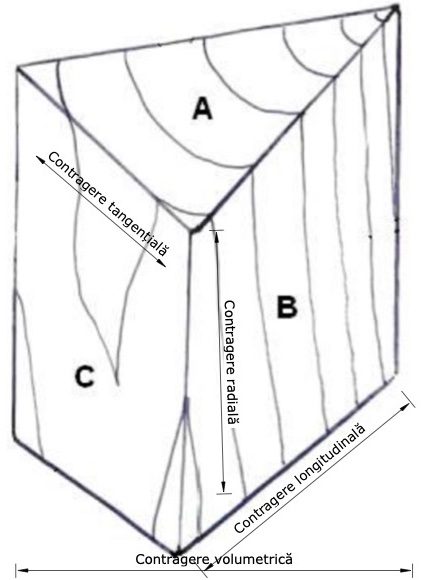
These are important phenomena that occur in wood with changes in moisture content. They result in dimensional and volumetric changes as water enters or leaves the wood. Due to the hygroscopic nature of wood, these phenomena are permanent and pendular, also known as wood movement. They cannot be fully prevented but can be reduced by stabilization treatments. Swelling increases wood dimensions and volume, while shrinkage reduces them.
Radial swelling/shrinkage = 4.2%
Tangential swelling/shrinkage = 8.2%
Volumetric swelling/shrinkage = 12.5%
Color / Appearance
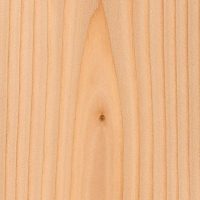
Heartwood ranges from yellow to medium reddish-brown, while the narrow sapwood is nearly white and clearly distinct. Knots are numerous but generally small.
Grain / Texture
The wood fibers are generally straight or twisted (torsional), with a uniform texture that feels slightly oily or greasy. Tracheids are tightly spaced, annual rings are narrow, and there is a high degree of uniformity with minimal difference between earlywood and latewood.
Decay Resistance
Moderately durable against decay. Known locally as “the oak of softwoods.”
Odor
European larch may emit a strong resinous odor during processing.
Allergies / Toxicity During Processing
Severe reactions are rare, but species in the genus Larix can cause skin irritation, hives, and lesions.
Price / Availability
Larch is harvested for construction lumber due to its high durability but is not widely available everywhere, which increases its cost.
Sustainability
This species is not listed in the CITES appendices and is reported by the IUCN as not being at risk.
Although larch is a softwood, it is deciduous, losing its needles in autumn. It is often planted as an ornamental tree in Europe. Smoked larch veneer is commonly used as a decorative wood finish.
*Information sourced from Wood Database.