
AFZELIA
Technical Details
Wood Density
The weight per m³ of Afzelia wood is quite high, around 835 kg.
Janka Hardness Test

The Janka test is useful to directly determine how well wood resists impacts, wear, and accidents, and also to indirectly predict difficulty in nailing, screwing, and sanding. The Janka hardness result for Afzelia is 8230 N.
Bending Strength

Bending strength measures a species' resistance before breaking. It can be used to determine the overall strength of a wood species. Unlike the modulus of elasticity, which measures wood deformation but not its final strength (some species may bend under stress but not break easily). The bending strength of Afzelia wood is 109 MPa.
Modulus of Elasticity

The modulus of elasticity measures the stiffness of wood and is a good general indicator of its strength. According to tests, Afzelia has a modulus of elasticity of 11.75 GPa.
Compressive Strength

Compressive strength parallel to the grain measures the maximum crushing resistance when force is applied to the ends of the wood. According to tests, Afzelia has a compressive strength of 66 MPa.
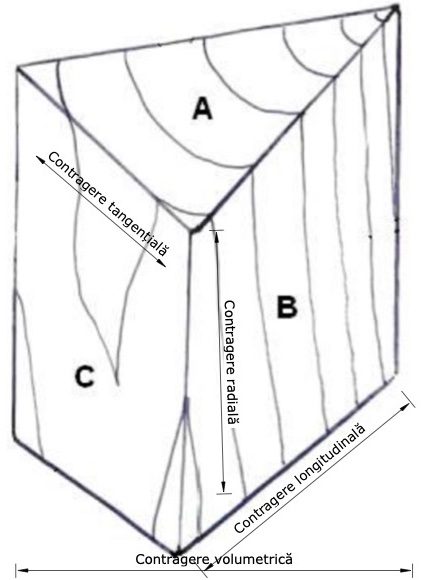 Wood Swelling and Shrinking
These are very important phenomena that occur in wood as the moisture content in the cell walls changes. They involve variations in dimensions and volume as water enters or leaves the wood. Considering the hygroscopic nature of wood, these phenomena are permanent and pendular in character, also known as wood movement. They cannot be prevented but can be reduced through different wood stabilization methods. Swelling increases the wood's dimensions and volume, while shrinking is the opposite phenomenon, reducing dimensions and volume due to decreased bound water content.
Radial swelling and shrinking = 3.3%
Tangential swelling and shrinking = 4.8%
Volumetric swelling and shrinking = 8.2%
Color/Appearance
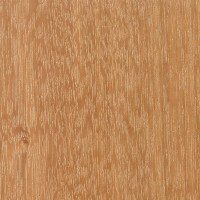
Heartwood ranges from golden to reddish-brown. Well-defined sapwood is a pale yellowish-white. The color tends to darken with age.
Grain/Texture
The wood fiber is twisted, following fairly regular undulating lines, either in the radial or tangential plane. It has a uniform, medium-to-coarse texture and a naturally glossy appearance.
Durability/Rot Resistance
Considered very durable, moderately resistant to termites, and susceptible to other insect attacks, though it has good resistance to marine pests.
Odor
No characteristic odor.
Allergies/Toxicity During Processing
Some Afzelia species have been reported to cause irritation to the skin, eyes, and respiratory system, as well as sneezing.
Price/Availability
Sometimes exported to Europe but mostly used locally (especially in Mozambique). Prices in our country are relatively high.
Sustainability
This species is not listed in the CITES appendices and is reported by IUCN as a species without growth concerns.